
Back to School Essentials Spanish Learning
Back to school essentials for Spanish learning includes a variety of options to encourage language learning before the new school year starts. Whether you’re a parent just beginning your child’s Spanish learning journey or a bilingual teacher planning for back-to-school, teaching kids Spanish doesn’t have to be daunting.
With a mix of creativity, everyday practice, and engaging activities, you can spark excitement about learning a new language and set your students—or kids at home—on the path to bilingual success.
This back-to-school season, let’s make Spanish learning feel like an adventure! Below, you’ll find hands-on ideas with step-by-step instructions perfect for parents and educators. From vocabulary-building games to cozy story-times, these activities are easy to implement and fun for kids to explore.
Build a Spanish Vocabulary Toolkit with Everyday Words
The first step for teaching Spanish for kids is to introduce common school-related vocabulary. Kids learn best when language connects to their daily lives, so why not start with objects they use every day?
Here’s How to Build Your Spanish Vocabulary Toolkit:
Choose a Starter List of Spanish Words as part of your back to school essentials:
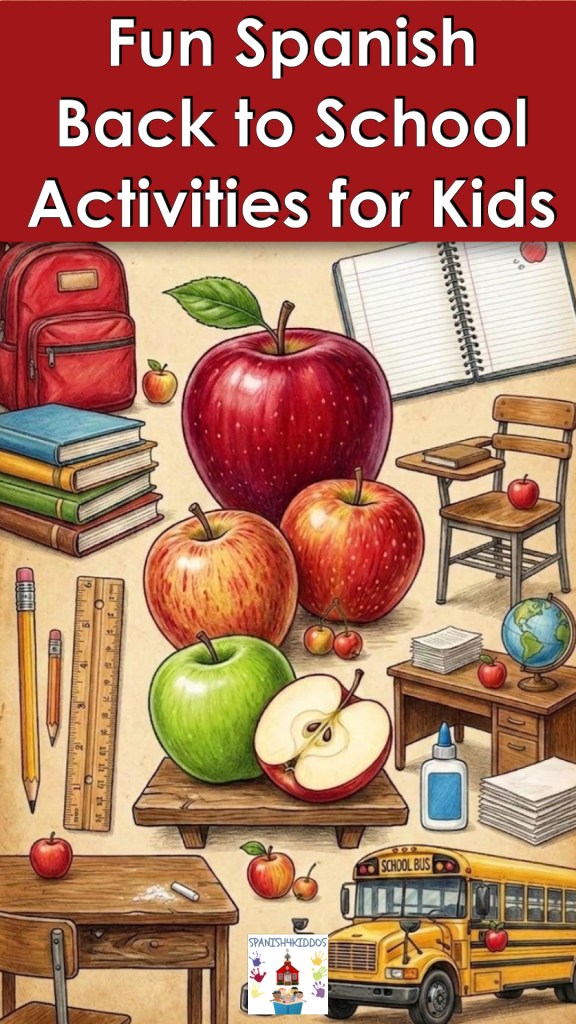
Focus on words for items children will see and use in learning spaces. Or, use the Spanish4Kiddos FREE printable. For example:
- la mochila (backpack)
- el lápiz (pencil)
- el libro (book)
- la silla (chair)
- el cuaderno (notebook)
- el escritorio (desk)
- el pizarrón (chalkboard)
- el autobús escolar (school bus)
- la regla (ruler)
- el papel (paper)
Label Items in the Environment:
Place sticky notes or printable labels on objects around the classroom or home. For example: stick a note labeled “mochila” on a backpack. Each time kids see the label, they’ll naturally absorb the word.
Use Visual Aids or Flashcards:
Create vibrant flashcards with the Spanish word on one side and the picture or English translation on the other. Play matching games or quizzes with the cards to reinforce vocabulary.
Integrate Words into Daily Routines:
Incorporate the words into everyday conversations, such as:
- “What your name?” (¿Cuál es tu nombre?)
- “Pon tu cuaderno en tu mochila.” (Put your notebook in your backpack.)
- “¿Dónde está tu lápiz?” (Where is your pencil?)
Make It Interactive:
Try vocabulary scavenger hunts where kids search for labeled items when you say the Spanish word aloud. For example:
“Encuentra un color azul.” (Find a blue crayon.)
This simple toolkit, a back to school essential, will grow as kids become familiar with their first Spanish words. Little by little, they’ll gain confidence while having fun!
Start Your Child’s Spanish Adventure Today!
Ready to bring the joy of Spanish learning into your classroom or home? Sign up below to receive your FREE Spanish Starter Set! Packed with fun resources and practical tools, it’s the perfect way to kickstart your journey. ¡Vamos a aprender juntos!

Transform Back-to-School Art into a Spanish Colors and Shapes Lesson
Art is a wonderful way to combine creativity with Spanish learning. Bright colors and shapes catch a child’s attention and provide engaging ways to memorize Spanish vocabulary.
Colorful Steps in Back to School Essentials to Give “Art Class” a Bilingual Boost:
- Introduce Colors and Shapes in Spanish:
- Begin with basic colors and shapes, like:
- Colors: rojo (red), azul (blue), verde (green), amarillo (yellow), orange (naranja)
- Shapes: círculo (circle), cuadrado (square), triángulo (triangle), rectángulo (rectangle), corazón (heart)
Provide Materials for a Fun Art Project:
Use construction paper, crayons, markers, paints, or pre-cut shapes.
Create Together:
As kids draw or assemble their shapes into a craft project, encourage them to say the colors and shapes they select aloud in Spanish. For example:
- “Voy a pegar un triángulo rojo.” (I’m going to glue a red triangle.)
Practice with a Game:
Play a game like “Encuentra y Dibuja” (Find and Draw), where you call out colors and shapes in Spanish for kids to find or draw on their papers.
Wrap Up with a Show-and-Tell:
- Have the kids show their artwork and describe it in Spanish:
- “Mi dibujo tiene tres cuadrados verdes.” (My drawing has three green squares.)
- Art projects bring visual and kinesthetic learning into Spanish lessons, helping kids learn colors and shapes while nurturing their creativity.
Take the First Step Toward Bilingual Brilliance
There’s no better time to start than now! Subscribe today to get your FREE Spanish Starter Set and access engaging, beginner-friendly materials that both teachers and parents love. Let’s make Spanish learning simple, fun, and effective—together!
Create a Spanish Storytime Corner as Back to School Essentials
Reading together is one of the most enriching ways to learn Spanish for kids. A cozy bilingual storytime space can ignite imagination and curiosity, making language learning feel magical.
Steps to Set Up a Spanish Storytime Corner:
- Gather Bilingual or Spanish Books:
- Choose books based on your child’s age and interests. Some great options include:
- “La Oruga Muy Hambrienta” (The Very Hungry Caterpillar)
- “Donde Viven Los Monstruos” (Where the Wild Things Are)
- “Buenas Noches, Luna” (Goodnight Moon)
- Or, visit the Spanish4Kiddos Bilingual Story section for more fun fairytale stories or nonfiction options.
Create a Cozy Reading Space:
Add pillows, blankets, and colorful posters with Spanish phrases. Display books in a way that invites children to pick one.
Read Together with Expression:
Read aloud slowly, emphasizing key Spanish words. Use gestures or props to make the story interactive. For example, use toy food while reading “La Oruga Muy Hambrienta.”
Pause to Ask Questions in Spanish:
Ask simple questions related to the story, like:
“¿Qué come la oruga hambrienta? (What does the hungry caterpillar eats?)
“¿Dónde está el monstruo?” (Where is the monster?)
Encourage Retelling:
After reading, invite kids to retell the story in Spanish. They can use simple phrases, pictures, or props to share the story their own way.
Through storytime, children learn vocabulary, structure, and storytelling—all while bonding with you in a special way.


Organize a Spanish Numbers Scavenger Hunt
Looking for an exciting way to practice Spanish numbers during the back-to-school season?
Try a scavenger hunt! This fun game blends physical energy with language learning.
How to Set Up a Spanish Numbers Scavenger Hunt:
Practice Numbers in Spanish:
- Start by teaching numbers 1-10 (uno, dos, tres…). Practice counting objects together, like “uno, dos, tres manzanas” (one, two, three apples).
Hide Objects Around the Room:
Choose small objects or toys and group them in sets. For example, you can use 3 crayons, 5 books, or 7 blocks.
Write Out Simple Spanish Clues:
- Use prompts like:
- “Busca cinco lápices.” (Find five pencils.)
- “Encuentra dos libros azules.” (Find two blue books.)
- Let the Hunt Begin!
- Read each clue aloud in Spanish, and have the kids search for the corresponding items.
- Encourage them to count their findings aloud in Spanish when they return with the objects.
Celebrate Their Success in Spanish:
- Cheer them on with phrases like:
- “¡Muy bien!” (Very good!)
Scavenger hunts make back-to-school Spanish learning active and unforgettable—kids won’t even realize they’re practicing numbers!
Practice Spanish Greetings and Polite Expressions
Creating a warm and welcoming bilingual environment starts with greetings and manners.
Learning simple Spanish phrases like “Hola” and “Gracias” helps kids gain confidence in conversations.
How to Teach Spanish Greetings and Etiquette:
Teach Core Phrases:
Begin with greetings and polite expressions:
- Hola (Hello)
- ¿Cómo estás? (How are you?)
- Gracias (Thank you)
- Por favor (Please)
- Or, you can use the Spanish Basic Words Sticker to teach basic Spanish phrases.
Practice Through Role Play:
Act out everyday scenarios, like walking into a classroom, and have kids practice greeting each other in Spanish:
“Hola, buenos días.” (Hello, good morning.)
Introduce Call-and-Response Games:
- Use greetings in fun interactions. For example, say:
- Teacher: “Hola, ¿cómo estás?” (Hi, how are you?)
- Kid: “Estoy bien, gracias. ¿Y tú?” (I’m good, thank you. And you?)
Play a Greetings Game:
Play “Greetings Tag” where kids have to greet someone in Spanish to pass the tag.
Reinforce Every Day:
Make Spanish greetings part of your daily routine. Use them in the classroom or at home and encourage kids to greet family members or friends in Spanish, too.
These small, simple phrases are the building blocks of communication and help kids naturally integrate Spanish into their interactions.
Make This School Year a Spanish Learning Adventure!
With a little creativity and consistency, back-to-school Spanish learning can be an exciting time for kids. These five activities are designed to help bilingual children develop their vocabulary, confidence, and love for Spanish, all while having fun!
Remember, the journey into Spanish for kids doesn’t have to be perfect—it’s about small gains, joyful moments, and learning together. So, gather your school supplies, tune that creativity meter to high gear, and get ready for a year where Spanish truly comes alive.
Looking for More Spanish Learning Ideas?
Check out Spanish4Kiddos for engaging bilingual resources, tips, and activities to make language learning fun and meaningful for your classroom or home. I’m here to support you every step of the way!
Turn “Hola” into Hours of Learning Fun!
Wouldn’t it be amazing to see your kids light up when they start learning Spanish? With the FREE Spanish Starter Set, that’s exactly what will happen. Sign up now to get age-appropriate activities, vocabulary boosters, and tips sent straight to your inbox.
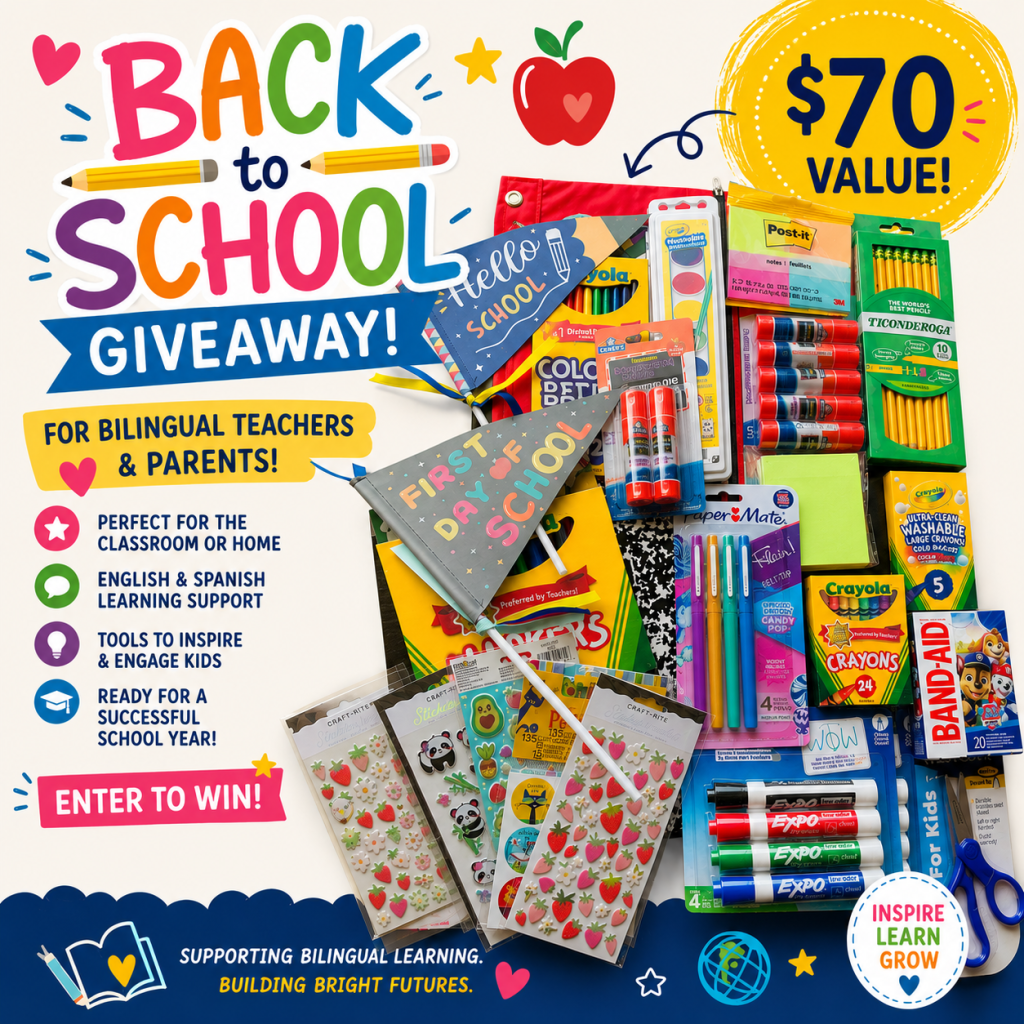
Back to School Giveaway
📚✨ BACK-TO-SCHOOL GIVEAWAY! ✨📚
One lucky bilingual teacher or parent will win a $70 value School Supply Bundle filled with classroom favorites to kick off the new school year! 🍎✏️
Whether you’re teaching in the classroom, homeschooling, or introducing Spanish at home, this bundle is designed to inspire learning and creativity.
🎒 Because every great school year starts with the right supplies!
ENTER THE BACK TO SCHOOL GIVEAWAY


Get Your Free Spanish Sight Words Workbook
Subscribe to our Spanish Sight Words newsletter and receive a free workbook. The booklet consists of writing practice, classroom labels, and activities.

Spanish Nursery Rhymes for Preschoolers
Subscribe and receive your Free Spanish Nursery Rhymes for Preschoolers Workbook.

