Bilingual Teaching Made Easy: Lesson Plan Themes for Spanish Learners
Teaching kids Spanish while incorporating fun and engaging themes is one of the best ways to nurture bilingual skills. Whether you’re a teacher in a dual-language classroom or a parent raising bilingual children, themed learning promotes interest, structure, and cultural understanding.
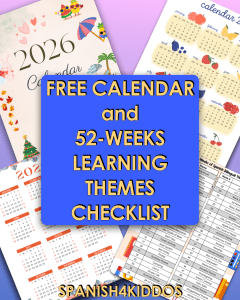
In this guide, you’ll learn simple learning themes you can use, tips for planning lessons, and how to access a FREE 52-Week Checklist and Calendar to make your lessons stress-free.
Bilingual Teaching Using Thematic Learning in Bilingual Education
Themes allow children to focus on vocabulary and concepts tied to real-life situations. They make language learning:
- Interactive and fun: Kids actively participate in themed activities.
- Contextual: Themes link Spanish words to everyday objects and environments.
- Consistent: Weekly themes create structure while introducing new topics gradually.
By tying lessons to themes like animals, seasons, or daily routines, children acquire Spanish naturally and retain it longer.
How to Plan Lessons Using Themes
Planning is key to making bilingual learning effective and bilingual teaching stress-free. Here’s a simple step-by-step guide:
Choose a Theme
- Select one from the checklist or use the calendar for automatic inspiration. For example:
- Week 1: Colors (colores).
- Week 2: Animals (animales).
Introduce Vocabulary
- Begin with 5–10 words. Use visual aids like flashcards, anchor charts, puzzles, or printable worksheets.
- Speak slowly and model pronunciation.
Activities
- Incorporate hands-on projects that match your theme:
- Colors: Have kids paint rainbows while naming each color.
- Puzzle Activity: Use various foods images or cut-outs of different colors to identify each color.
Reinforce with Songs and Games
- Sing Spanish nursery rhymes or play games like bingo using the week’s vocabulary.
End with a Reflection
- Ask kids to share what they learned in Spanish. For example: ¿Qué animales aprendiste? (Which animals did you learn?).
Creative Bilingual Teaching Learning Themes
Here are some core bilingual teaching themes to use throughout the year. You can combine these with activities, songs, or crafts for added fun:
Animals Around the World – Animales del Mundo
- Learn animal names like perro (dog) and elefante (elephant).
- Activities: Play “I Spy” with animal toys or create an interactive “animal safari.”
- Include habitats: Teach vive en la selva (lives in the jungle) or vive en el agua (lives in the water).
Tip: Use books like Oso Pardo, Oso Pardo, ¿Qué Ves Ahí? for animal review.
Animal Adventure Safari (Theme: Animals Around the World – Animales del Mundo)
- Objective: Teach kids animal names in Spanish and their habitats.
- What You’ll Need:
- Animal flashcards or toy animals
- A map or picture book showing different animal habitats
Spanish animal songs (Los Animales en Español)
Steps:
Introduction: Teach 5–10 animal names in Spanish (león, jirafa, mono, oso), along with the sounds they make. Show visual aids or educational tools as you introduce the animals.
Interactive Game: Set up a pretend “safari” around the house or classroom. Have kids find hidden animal pictures or toys and name them in Spanish. Add habitat-related phrases like vive en la selva (lives in the jungle) or vive en el agua (lives in the water).
Creative Activity: Ask kids to draw their favorite animal and say its name in Spanish.
New Year Refresh Tip: Add new animals each season (marine animals in summer, hibernating animals in winter) and pair them with cultural stories from Spanish-speaking countries (like llamas in Perú).
Colors and Shapes – Colores y Formas
- Vocabulary: Teach basic colors (rojo – red, verde – green) and shapes (círculo – circle, triángulo – triangle).
- Activities: Shape-themed cutouts or “rainbow art” projects using Spanish color words.
- Song: Sing De Colores to reinforce the vocabulary.
Rainbow Art (Theme: Colors and Shapes – Colores y Formas)
- Objective: Teach children Spanish vocabulary for colors and shapes while developing artistic creativity.
- What You’ll Need:
- Colored paper, crayons, or paints
- Pre-cut shapes (circles, triangles, squares)
Steps:
Introduction: Teach Spanish color names (rojo, verde, azul) along with basic shapes (círculo, cuadrado, triángulo). Use real objects to reinforce learning.
Activity: Have kids create “rainbow art” by gluing colorful shapes onto a sheet of paper. Encourage them to name each color and shape in Spanish as they place it. (¿Qué color es este? Es amarillo.)
Song: End the lesson with a color-themed Spanish song like De Colores.
New Year Refresh Tip: Integrate seasonal themes by adding holiday shapes (hearts in February, pumpkins in October). Use glitter or textured materials to make it feel new each time.


Bilingual Teaching Ideas for Common Routines
Weather and Seasons – El Tiempo y Las Estaciones
- Teach weather phrases like hace frío (it’s cold), llueve (it’s raining), and season names (primavera – spring).
- Daily Activity: Use a “weather tracker” to discuss the weather in Spanish each day.
Tip: Compare seasonal weather in Spanish-speaking countries (like summer in Argentina during Christmas!).
Weather Journal (Theme: Weather and Seasons – El Tiempo y Las Estaciones)
- Objective: Teach kids Spanish weather vocabulary and how seasons differ in Spanish-speaking countries.
- What You’ll Need:
- A daily weather chart
- Drawings or printouts of seasons/weather (e.g., sun, rain, snow)
- Colored markers
Steps:
Introduction: Teach vocabulary like hace sol (it’s sunny), está lloviendo (it’s raining), and season names (primavera – spring).
Weather Check: Each day, ask kids to look outside and describe the weather in Spanish. Add their observations to a weather chart. Or, create a graph of each daily weather.
Creative Activity: Create a journal where kids draw pictures of the weather next to simple descriptive phrases they’ve learned in Spanish.
New Year Refresh Tip: Incorporate climate around the world: Discuss how seasons differ in Spanish-speaking countries (summer in Argentina during December). Introduce fun “extreme” weather vocabulary like huracán (hurricane) or tormenta (storm).
Family and Friends – La Familia y Los Amigos
- Explore family-related vocabulary like mamá (mom), papá (dad), and amigo (friend).
- Activities: Create a family tree or role-play family scenarios with phrases such as ¿Dónde está mamá? (Where is mom?).
- Song: Sing La Familia Dedo (The Finger Family Song).
Daily Routines Bingo (Theme: Home and Daily Routines – La Casa y las Rutinas)
- Objective: Teach kids Spanish vocabulary for simple daily tasks and routines.
- What You’ll Need:
- Bingo boards with pictures of routine activities (brushing teeth, eating, sleeping)
- Tokens or markers
Steps:
Introduction: Teach common daily routine phrases, such as me lavo las manos (I wash my hands) or me cepillo los dientes (I brush my teeth).
Interactive Game: Play a game of bingo to reinforce daily routine vocabulary. Call out phrases like Estoy despertándome (I’m waking up), and have kids place markers on their bingo boards.
Follow-Up Activity: Role-play morning or bedtime routines using Spanish phrases.
New Year Refresh Tip: Challenge older kids by adding clock-reading skills (Son las ocho de la mañana – It’s 8 in the morning) or create new routines based on holidays (¡Es hora de abrir regalos! – It’s time to open presents!).
Food and Mealtime – La Comida y La Hora de Comer
Vocabulary: Focus on meal words like queso (cheese), arroz (rice), and mealtime phrases (Tengo hambre – I’m hungry).
Activity: Set up a toy market or pretend restaurant where children order food using Spanish phrases like Quiero una manzana, por favor.
Market Day Role Play (Theme: Food and Mealtime – La Comida y La Hora de Comer)
- Objective: Teach food names in Spanish and mealtime phrases.
- What You’ll Need:
- Toy food items or picture cut-outs
- Play money
- Bilingual shopping list
Steps:
Vocabulary Practice: Teach key food vocabulary (manzana – apple; pan – bread). Include phrases like tengo hambre (I’m hungry) or quiero esto (I want this).
Role Play: Set up a pretend “market” in the room. One adult can be the vendor while kids shop for items using Spanish. They can “buy” items and practice saying Quiero una manzana, por favor.
Wrap-Up Activity: Kids can set up a pretend dinner table and practice naming foods (el queso está en la mesa – the cheese is on the table).
New Year Refresh Tip: Create themed markets based on holidays around the world, like a mercado de Navidad with Christmas foods or tropical fruits in summer.
Download Your FREE 52-Week Checklist and Calendar
To help you stay organized, I’ve created a FREE bilingual checklist and calendar! It includes:
- Weekly Thematic Ideas (from animals to routines).
- Seasonal Topic Suggestions (like holidays and weather).
- Practical tips to make teaching easier.
How to Use It:
- Review the weekly checklist for a structured overview of themes.
- Use the bilingual calendar to track learning progress.
- Check off vocabulary lists and activities as you complete each theme.
Click here to download your FREE 52-Week Checklist and Calendar!
Incorporate Language Into Daily Life
- Outside of thematic teaching, practice Spanish in real-life settings:
- Label objects at home (la puerta – the door, la silla – the chair).
- Practice daily routines in Spanish: Me lavo los dientes (I brush my teeth).
- Watch Spanish cartoons and read bilingual storybooks.
- Small, consistent exposure helps children build their bilingual skills naturally.
Refresh Learning Themes for the New Year
- Keep your bilingual lessons exciting all year by refreshing your approach:
- Introduce seasonal crafts (like snowflake art for winter or flower paintings in spring).
- Add culturally relevant holidays like Día de los Muertos (Day of the Dead) or Día del Niño (Children’s Day).
- Adjust difficulty levels as kids grow more confident in their Spanish skills.
Learning Resources for Extra Help
Explore tools to enhance your bilingual teaching:
- Books: La Oruga Muy Hambrienta (The Very Hungry Caterpillar) or classic tales in Spanish.
- Music: Spotify playlists with Spanish children’s songs or YouTube channels.
- Printables: Free online worksheets for themes like numbers, letters, and animals.
Start Your Bilingual Journey Today!
By tying language skills to weekly themes, Spanish learning becomes less intimidating and more engaging for kids. Whether you’re introducing weather terms, singing about animals, or creating cultural crafts, these activities make learning meaningful.
Don’t forget to download your FREE 52-Week Checklist and Calendar to stay organized and inspired year-round!
Click here to get started!
Let’s make bilingual education fun and effective. If you have questions or need more ideas, let me know in the comments. ¡Buena suerte! (Good luck!) 🌟
The 2026 Spanish Bilingual Coloring Calendar for Kids is a perfect way to make learning fun throughout the year! With activities for every month, children can explore Spanish vocabulary, celebrate holidays, and unleash their creativity.
Here’s how to use it:
- Monthly Themes: Incorporate the calendar’s activities into lessons or home routines.
- Color and Learn: Kids can color each month while practicing Spanish words related to the theme.
- Keepsake: At the end of the year, save the calendar as a special memory of your child’s artistic and language-learning journey.


Get Your Free Spanish Sight Words Workbook
Subscribe to our Spanish Sight Words newsletter and receive a free workbook. The booklet consists of writing practice, classroom labels, and activities.

Spanish Nursery Rhymes for Preschoolers
Subscribe and receive your Free Spanish Nursery Rhymes for Preschoolers Workbook.